October 13, 2023

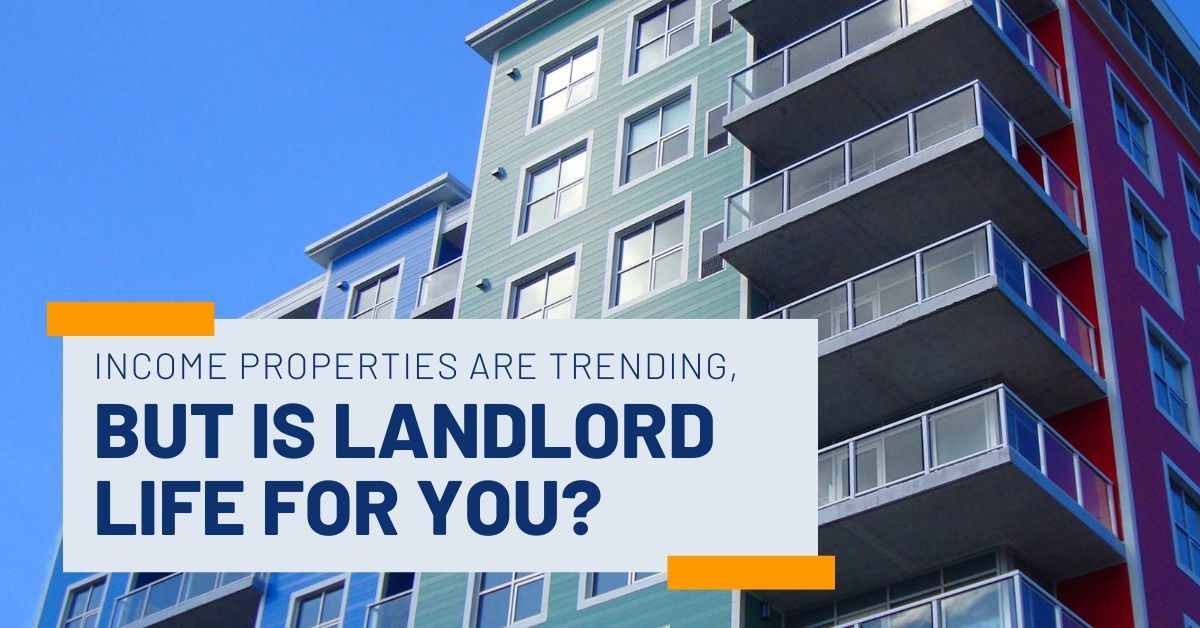
Income Properties Are Trending, But Is Landlord Life for You?
Income Properties Are Trending, But Is Landlord Life for You?


If the thought of investing your money into brick and mortar—or perhaps some stylishly-painted siding—excites you, join the club. 


Investing in real estate has long been one of Americans' favorite ways to grow their wealth. In fact, over 70% of single-family rental properties are currently owned by individual investors rather than corporations, according to Census data.1 


Moreover, a decade's worth of Bankrate surveys has found that Americans often prefer real estate for long-term wealth building over other investments. According to Bankrate's latest survey, for example, Americans have historically embraced real estate, in part, because of the strong return on investment it can offer—especially to investors willing to stick with a property over time.2 It’s also a popular way to hedge against inflation since both rental income and property values tend to rise in tandem with overall prices.3


Now, as higher interest rates continue to push priced-out homebuyers to the sidelines, a new crop of “mom and pop” investors are eyeing the mushrooming rental market as a potential goldmine.4 Interest in buying a home to both live in and rent is also on the rise, especially amongst cash-strapped buyers looking to supplement their mortgage payments.5


But how do you know if you’re well-suited to take advantage of these real estate investment opportunities? Here are three signs that owning a rental property could be right for you.


YOU'RE A HOMEBUYER WHO WANTS HELP COVERING THE MORTGAGE


If you're looking for a creative way to buy a home without overspending, “house hacking” could be the answer. Increasingly popular with first-time homebuyers and budget-conscious investors, house hacking simply means buying a home that you intend to live in while renting out a portion of it to one or more tenants.5 


House hacking also tends to be easier to break into than traditional real estate investing since you don't need as high a credit score or as large a down payment to qualify for a mortgage. In fact, some government-backed mortgage programs will let you buy a primary residence with little to no money down.6 Buying a home you don't plan to live in, by contrast, may require you to put down as much as 15% to 25% to qualify for a loan.7 


If you house hack, the money you collect for rent each month can help cover your mortgage and other homeownership expenses. Depending on your setup, you may also be able to save on utility bills by splitting them with your tenant or tacking a portion onto their monthly rent. Another major advantage of house hacking is that it entitles you to certain tax benefits and deductions available only to landlords.8


When it's time to start your search, we can help you find a property that's ideal for house hacking, such as a house with a walkout basement, a multifamily unit, or a home with enough outdoor space to build an accessory dwelling unit or garage apartment.


YOU'RE AN INVESTOR LOOKING FOR STEADY AND RELIABLE INCOME


If you’re not crazy about the idea of a live-in tenant but still desire an additional stream of income, a dedicated long-term rental property could be a better option for you. Besides the monthly proceeds, purchasing a rental home can also add diversity and long-term stability to your investment portfolio and help you build wealth over time.9


According to data from the Federal Reserve, real estate owners have historically prospered. In early 2020, for example, the median home was worth almost triple what it was 30 years prior. Then, during the pandemic-era real estate boom, average home prices grew at an especially frenzied clip, climbing by nearly 50%, on average, in just two and a half years.10 


However, the rate of appreciation can be hard to predict, so it’s prudent to invest in a property that also offers positive cash flow, which means the rent you take in exceeds your expenses. This strategy helps to ensure that you’ll put money in your pocket each month, even if the property’s value takes time to grow.


While today’s higher mortgage rates can make it more challenging for landlords to turn a profit, investment opportunities aren’t reserved for cash buyers. In fact, currently, almost 60% of real estate investors take out a loan to finance their purchase, according to Thomas Malone, an economist at the real estate data firm CoreLogic.4 He also notes that more small investors are stepping in to meet demand for rental housing, which has grown since many would-be buyers remain priced out of the purchase market.4 


If you want to explore opportunities for a residential rental property that's good for your wallet and attractive to renters, we can help. Reach out with questions or to schedule a free consultation. 


YOU'RE AN EXPERIENCED INVESTOR LOOKING TO MAXIMIZE YOUR POTENTIAL RETURNS


Another increasingly popular way to draw income from an investment property is to convert it to a short-term vacation rental. But beware: This strategy can be riskier as some municipalities have tightened rental restrictions and others are suffering from market oversaturation.11,12 


With that said, if you're an experienced investor who can afford to take on some uncertainty, then investing in a short-term rental could make sense for you. 


If you find the right property, for example, you could earn significantly more renting it short-term on a platform like Airbnb than if you rented the home to a long-term tenant.11


The key is to keep it occupied as much as possible at a premium nightly rate. To do that, you’ll need some marketing savvy, hospitality skills, and business acumen. Of course, you can always hire a professional property manager, but you’ll need to factor the cost into your budget.


The vacation rental market enjoyed a boom during the pandemic, and some inexperienced investors are finding they bit off more than they can chew. As a result, there's an opportunity to snap up some of these properties, but you'll need some cash on hand and a willingness to learn the business.12


We can help you scout opportunities in our local market or, if you’re interested in investing in another area, we can refer you to an agent there for assistance.


BOTTOMLINE


Investing in real estate can be a great way to build your wealth long-term and earn some extra income. But to make the most of your investment, it pays to be strategic. 


Call us for a consultation so we can discuss your goals and budget. We'll help you discover neighborhoods with the best income potential, point out the homes most suited to renting, and help you brainstorm the best investment strategy for you. 

Before you take the plunge, make sure you can answer “YES” 

to these three questions:

Are you ready to be a landlord?


Owning a rental property can take a lot of time and energy. You're not just buying passive income, you're also building sweat equity since the time you spend maintaining, marketing, and managing your rental can add up quickly. So be prepared to do some soul-searching to ensure you’ll not only flourish as a landlord, but actually enjoy it. 


If you want to invest in real estate but aren’t prepared to put in the day-to-day effort required, we can refer you to a property management service for help. 


Can you afford to invest in real estate?


The last thing you want is to get over-extended with your new real estate venture. Besides the cost of purchasing the property, you’ll need to consider additional expenses, like property taxes, insurance, administrative costs, and maintenance and repairs. You will also need a cash reserve for unexpected issues or potential vacancies.


We can help you run the numbers to determine whether you can charge enough rent to offset your expenditures.


Have you found the right income property?


Even if you’ve got your finances in order and are emotionally ready to invest, your success as a landlord will also depend on the property you buy. The criteria for a good rental home and a good family home are often different, so it’s important to lean on professionals for advice. 


We can help you find an ideal rental property, taking into account your budget, risk appetite, and investment goals. If you decide to invest in a different area, we'll connect you with an agent who's more plugged into that community. Reach out today to schedule a free consultation.


The above references an opinion and is for informational purposes only. It is not intended to be financial, legal, or tax advice. Consult the appropriate professionals for advice regarding your individual needs.


Sources:

PR Newswire -

https://www.prnewswire.com/news-releases/census-data-show-individuals-continue-to-own-largest-share-of-single-family-rental-homes-301725024.html

Bankrate - 

https://www.bankrate.com/investing/survey-favorite-long-term-investment-2022/ 

Forbes -

https://www.forbes.com/sites/forbesbusinesscouncil/2022/04/14/why-income-generating-real-estate-is-the-best-hedge-against-inflation/?sh=1081ce921746

MarketWatch -

https://www.msn.com/en-us/money/realestate/another-challenge-for-homebuyers-more-investors-are-snapping-up-homes-and-40-of-them-are-using-cash/ar-AA1foWSB

Realtor.com -

https://www.realtor.com/advice/buy/on-the-house-house-hacking-your-way-into-your-first-home/ 

NerdWallet - 

https://www.nerdwallet.com/article/mortgages/government-home-loans

LendingTree - 

https://www.lendingtree.com/home/mortgage/down-payment-for-rental-property/ 

Quicken Loans - 

https://www.quickenloans.com/learn/house-hacking

Investors Business Daily -

https://www.investors.com/etfs-and-funds/personal-finance/rental-properties-investing-experts/

St. Louis Fed FRED Economic Data - 

https://fred.stlouisfed.org/series/MSPUS 

Story by J.P. Morgan -

https://story.jpmorgan.com/real-estate-news/thinking-about-investing-in-short-term-rentals-heres-what-to-know 

Skift - 

https://skift.com/2023/07/21/short-term-rental-saturation-leads-to-a-correction-and-lots-of-home-sales/

February 26, 2026
At the Vickie Landis Rentsel Team of Keller Williams Realty Group, we’re always looking for small ways to say thank you to our amazing clients and community. That’s why we’re excited to host a FREE Community Shredding Event this spring! If you have old tax returns, bank statements, medical paperwork, or other sensitive documents piling up at home, this is the perfect opportunity to safely and securely dispose of them. ⸻ Why Shredding Matters Identity theft continues to be a growing concern, and one of the simplest ways to protect yourself is by properly destroying confidential documents. Items like: • Old tax documents • Credit card statements • Bank records • Medical paperwork • Pre-approved credit offers • Anything containing your Social Security number or account information Shredding these materials helps prevent personal information from falling into the wrong hands.
February 2, 2026
When most homebuyers calculate whether they can afford a new home, they focus almost exclusively on one number: the monthly mortgage payment. It's the figure lenders qualify them for, the number discussed during showings, and the benchmark used to determine budgets. The average annual cost of owning and maintaining a single-family home in the U.S., excluding the mortgage itself, is estimated at around $21,400 in 2025—roughly $1,800 per month.¹ When you factor in these national average ownership expenses, a $2,500 monthly mortgage can grow to over $4,000 in total housing costs. for a mortgage answers one question: "Can a bank trust you with this loan?" It doesn't answer the more important one: "Can you comfortably maintain this lifestyle?" In today's market, where nearly 45% of homeowners report post-purchase regrets (most commonly because maintenance and hidden costs were higher than expected), understanding the full financial picture before buying has never been more important.² The Predictable Ongoing Costs Property Taxes Property tax bills have been rising sharply nationwide, with the average reaching $4,271 in 2024 and many homeowners seeing increases of 16% or more. 3 Even where tax rates dip slightly, rising home values keep actual bills climbing—creating the irony that a home's appreciation increases annual expenses. Property taxes aren't truly fixed. Reassessments happen regularly, and as neighborhood values rise, so do tax bills—even when rates stay the same. Homeowners Insurance As of December 2025, the average premium for a new policy rose 8.5% year-over-year . 4 Climate disasters, higher rebuilding costs, and insurer risk recalibration continue driving these increases, and the trend shows no signs of reversing. A homeowner could see their monthly payment jump $200-300 in a single year without taking any action themselves—simply because their mortgage servicer adjusted the escrow to cover higher insurance premiums. HOA Dues About 40% of homes for sale have HOA fees, with median costs around $125 per month, though single-family homes typically range from $200-$300 monthly.⁵ These fees rarely decrease and often include special assessments that can add thousands in unexpected annual costs. Utilities In 2024, energy and utility costs averaged $4,494 annually, with internet and cable adding another $1,515. 1 Buyers moving from apartments to single-family homes often see these costs double due to increased square footage, outdoor irrigation, and climate control demands. Routine Maintenance Beyond emergencies, homes require ongoing care: lawn service, gutter cleaning, pest control, HVAC servicing, and seasonal tasks. These aren't luxuries for many households—they're practical solutions to time constraints and property upkeep. Collectively, these services can add $200-400 monthly to ownership costs. The Irregular—but Inevitable—Expenses Major System Replacements This is where many homeowners get caught off guard. Maintenance and repairs aren't a matter of "if" but "when"—and recent years have made "when" far more expensive. Home maintenance now averages around $8,800 annually, with first-year homeowners often facing even higher costs. 1,6 Major repairs aren't cheap: ● HVAC replacement: $5,000-$10,000 ● Roof replacement: $8,000-$15,000 ● Water heater: $1,200-$2,500 ● Foundation repairs: $4,000-$12,000 These aren't possibilities—they're certainties with varying timelines. Use the inspection as a planning tool. A 15-year-old water heater or aging roof signals $8,000-12,000 in likely expenses within the first few years. That's not a deal-breaker—it's a budget roadmap. Buyers who understand these timelines can plan strategically instead of scrambling when systems fail. Newer isn't maintenance-free. Newer builds offer a temporary reprieve, but systems still age, warranties expire, and eventually every home requires major capital improvements. Emergency repairs happen at the worst times. An HVAC failure during a heat wave, a burst pipe in winter, or storm damage to the roof—these scenarios happen when it's least convenient and most expensive. Without liquid reserves, a single emergency can derail finances entirely. Ownership Costs That Creep Up Over Time Here's what surprises many first-time buyers: the so-called "fixed costs" of homeownership aren't actually fixed. While a locked-rate mortgage provides payment stability, the escrowed components—taxes and insurance—can climb significantly year over year due to inflation, climate risk, and local policy changes. A mortgage payment that felt comfortable at closing can feel tight three years later, even without lifestyle changes. Picture this: a letter arrives saying the monthly payment is increasing $200 because insurance premiums rose and the property was reassessed at a higher value. No move, no refinance, no renovation—yet annual housing costs just jumped $2,400. The same gradual creep affects utilities, maintenance services, and every other aspect of homeownership. Budgeting for homeownership means expecting these costs to rise 3-5% annually. True stability requires planning for volatility. Planning Smarter: How Homeowners Can Stay Ahead The encouraging news: buyer's remorse is largely preventable. The issue isn't buying the wrong house—it's buying without adequate preparation. Create a Dedicated House Repair Fund Separate from emergency savings, this fund exists solely for home maintenance and repairs. Treat it like a non-negotiable monthly bill—set up automatic transfers so it happens without thinking about it. The old rule of saving 1% of your home's value annually? It's outdated. Plan for more—closer to 2-3% of your home's value annually, or whatever amount lets you sleep at night knowing the HVAC won't derail your budget. Don't Drain Your Savings at Closing Cash reserves protect against surprises and prevent forced debt when repairs arise. If possible, keep several thousand dollars liquid after closing rather than putting every available dollar into the down payment or upgrades. That breathing room matters more than most buyers realize. Invest in Preventative Maintenance Annual HVAC servicing, gutter cleaning, and seasonal inspections catch small problems before they become expensive emergencies. A modest service call that prevents a major system failure is always worthwhile. Create a seasonal maintenance calendar: HVAC checkups in spring and fall, gutter cleaning before winter, roof inspections after major storms. Consistency prevents costly surprises. Know Your Home's Systems and Timelines Understanding when major systems were last replaced helps predict future expenses. A 12-year-old water heater isn't an emergency today, but it signals a likely expense within 2-3 years. Planning beats scrambling. When Homeownership Still Make Sense Despite the expenses, homeownership remains one of the most powerful wealth-building tools available to American families—when approached correctly! Long-Term Equity Building Mortgage payments build equity with every payment. Unlike rent, ownership creates a forced savings mechanism that compounds over decades. In most markets, homes appreciate over time, multiplying the wealth-building effect. Stability and Control Homeowners control their living environment. Want to renovate the kitchen, paint the walls, landscape the yard, or install solar panels? Ownership provides autonomy that renting never will. That control has both lifestyle and financial value. Predictability vs. Rent Volatility While ownership costs rise gradually over time, rent increases can be sudden and dramatic—with national rents climbing 31% over the past five year. 7 A fixed-rate mortgage provides payment predictability that renting cannot match. Yes, taxes and insurance increase, but the principal and interest portion—typically 60-70% of the total payment—remains locked. Renters face volatility on 100% of their housing costs. Lifestyle Benefits Beyond finances, homeownership offers intangible benefits: deeper community roots, stability for families, space for hobbies, and the pride of building something that's truly yours. These benefits have real value, even if they don't appear on a balance sheet. The key is ensuring the financial foundation supports the lifestyle, not undermines it. A Better Way to Think About Affordability The true measure of affordability isn't what a lender will approve—it's what allows sleeping well at night when the water heater fails or the insurance premium spikes. The smartest buyers calculate affordability as "mortgage plus carrying costs" from the start, which might narrow the price range slightly but creates breathing room and peace of mind. Homeownership remains one of the most powerful wealth-building tools available, but only when approached with financial realism rather than maximum leverage. Having an honest conversation about what affordability truly looks like isn't about limiting dreams—it's about making sure those dreams don't become financial nightmares. Sources: 1. Bankrate: https://www.bankrate.com/home-equity/hidden-costs-of-homeownership-study/ 2. Bankrate: https://www.bankrate.com/f/102997/x/c84a6b9359/homeowner-regrets-survey-press-release.pdf 3. Matic: https://matic.com/blog/2026-home-insurance-predictions/ 4. NAHB: https://www.nahb.org/blog/2025/12/property-taxes-2024-residential/ 5. Realtor.com: https://www.realtor.com/research/homeowners-associations-2024/ 6. Inman: https://www.inman.com/2026/01/12/as-home-maintenance-costs-rise-agents-turn-to-tools-that-reduce-buyer-risk/ 7. Rentec Direct: https://www.rentecdirect.com/blog/new-data-shows-the-state-of-rent-in-2025-from-rentec-direct/ 
January 5, 2026
Will 2026 be the year buyers stop waiting? Forecasters are split, predicting anywhere from 1.7% 1 to 14% 2 growth in home sales. That 12-point gap reveals the central question facing the housing market: how much will slightly lower mortgage rates and slowly eroding lock-in effects actually unlock pent-up demand? Nearly every major forecaster agrees the market will be more active than 2025. But beyond that consensus, predictions diverge sharply on pace and scale. The National Association of Realtors (NAR) expects robust 14% sales growth. Realtor.com sees a modest 1.7% bump. Both could be right for different markets and price points. For anyone planning to buy, sell, or simply understand their home equity position in 2026, these diverging forecasts matter less than the underlying fundamentals. Mortgage rates should settle slightly lower. Inventory will improve modestly. Prices will continue rising, though more slowly than recent years. The market is thawing. More importantly, the housing market appears to be returning to the pace and rhythm of more normal conditions after the artificial volatility of the pandemic era. The 2025 Context: Why the Market Stayed Frozen The 2025 housing market disappointed. Mortgage rates remained stubbornly above 6.5%, suppressing demand and keeping transaction volumes near historic lows. 8 As of mid-2025, more than 80% of U.S. homeowners hold mortgage rates below 6%, reinforcing the lock-in effect that has kept many would-be sellers on the sidelines.³ Affordability challenges reached acute levels. The typical first-time buyer aged to 40 years old 4 , reflecting simple math that monthly payments at elevated rates and prices pushed homeownership out of reach for younger buyers. The market did not crash but did not heal either, with overall transaction volume remaining constrained. 2026 Predictions: Where Forecasters Agree and Disagree Mortgage Rates: Consensus on Modest Improvement Forecasters agree broadly on mortgage rate trajectories. Expectations cluster tightly in the 6.0% to 6.4% range, representing modest but meaningful improvement from 2025 levels.  2026 Mortgage Rate Forecasts